


How to Plan a Corporate Team Outing for 50 to 100 Employees

Table of contents
A team outing for 50 to 100 employees is a logistics exercise, not just a choice of venue. Once a group crosses 50, one bus becomes two or three, lunch becomes a buffet that has to serve everyone without eating into the afternoon, and a small delay at pickup can cost an hour across the day. Budgets, venue capacity and last-minute headcount changes all need more planning than they would for a small team.
This guide from MICE Hospitality is for the HR manager, admin head or EA organising an outing for a group of this size. It covers what to decide first, how to budget per head, what to check in a venue, how to move 50 to 100 people safely and how to run the day to a timed plan.
Why 50 to 100 people changes the planning
Coordination multiplies. You are managing several sub-groups at once: separate coaches, parallel activity teams and different dietary needs.
Venues narrow. Plenty of resorts can serve lunch for 100. Fewer can run an activity for 100 in one space, offer breakout areas and provide a covered backup if it rains.
Small gaps cost more. A late bus or a missed headcount confirmation affects everyone.
Step 1: Decide the purpose and the format first
Agree on why the outing is happening before looking at venues. A reward trip needs a lighter agenda and a better stay. Team bonding needs structured activities that mix departments. An offsite with work sessions needs a hall, projector and sound system.
For a group of 50 to 100, a one-night format can be worth the extra cost, since the evening is often when people from different teams actually mix.
Step 2: Lock the headcount early and plan for drop-outs
Every vendor quote depends on headcount, and it is the number most likely to move. Set a firm RSVP deadline: three weeks ahead for a day outing, four to five weeks for an overnight trip. Use the same form to collect dietary needs, emergency contacts, pickup preference and any medical information attendees choose to share.
With 50 to 100 people, a few drop-outs are normal, so check each vendor's minimum guaranteed headcount and its cut-off for reducing numbers. For overnight trips, finalise the rooming list early.
Step 3: Build the budget per head
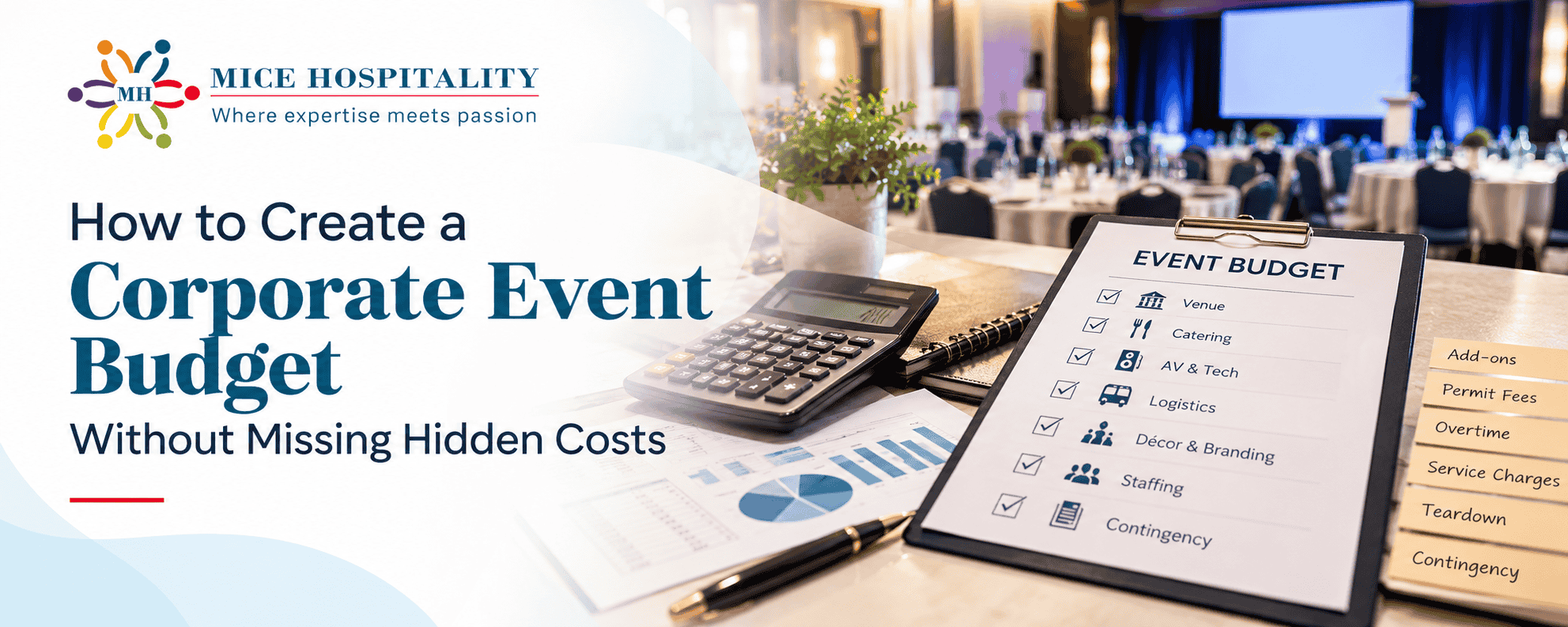
Companies often approve outing budgets per employee, so build yours the same way. Ask for quotes against each cost head rather than a lump sum, which is where hidden costs sit.
Two costs that are easy to miss are GST (confirm whether each quote includes it) and overtime charges if the day runs late.
Step 4: Choose a venue that can handle 100 people
When shortlisting corporate outing venues for a large group, look beyond the brochure capacity. Check whether the venue has:
one open area where all 100 people can gather for a briefing;
breakout space for teams of 10 to 12;
enough buffet counters to serve the group quickly;
a covered backup large enough for everyone if it rains;
enough washrooms and changing rooms;
exclusivity, or at least no competing groups that day;
coach access to the gate and a hospital within reasonable distance.
For groups across India, the right destination depends on travel time, group size, budget and the type of experience you want to create. Day outings work well within a few hours of the office, while overnight trips open up more options for resorts, destination activities and team experiences. .
Step 5: Plan transport for a group of 50 to 100
Transport is one of the easiest places for a large-group day to lose time.
Split 100 people across two or three coaches, which also gives you a backup if one breaks down.
Put a coordinator with a passenger list on each vehicle.
Use two or three fixed pickup points instead of door pickups.
Build in buffer time for loading people and bags.
Decide in advance whether to run an early return vehicle.
For out-of-state trips, check permits, driver rest periods and replacement vehicles.
Step 6: Design activities for a large, mixed group
With 50 to 100 people, expect a mix of ages, fitness levels and personalities. Split people into teams of 8 to 12 and mix departments deliberately, as self-picked teams tend to recreate office groups. Balance physical games with problem-solving and creative challenges, keep some activities optional, and use a facilitator who can hold a crowd of 100. End with a shared moment such as a results announcement or a group photo.
Step 7: Write the run of show
A run of show is a timed plan shared with every coordinator and vendor. A day outing for 100 might run like this:
Name one person as the single point of contact on the day, so vendors, coordinators and attendees all know who to call.
Safety, insurance and on-day essentials
Carry a first-aid kit and note the nearest hospital. Check that company insurance covers offsite and water-based activities, agree the alcohol policy in advance, share an emergency contact sheet with every coordinator, and confirm venue closing times to avoid overtime charges.
Should you plan it in-house or bring in a partner?
At 50 to 100 people, vendor negotiation, transport, activities, rooming and on-day coordination often take more hours than an internal team can spare, and the organiser rarely gets to enjoy the day. A partner makes sense for overnight trips, outings with several vendors, or weeks when the internal team is stretched.
MICE Hospitality plans corporate team outings for large groups, covering venue selection, transport and on-ground coordination. For teams travelling further, it also arranges group tours in India and abroad.
FAQs
Is a weekday or a weekend better for a large team outing?
A weekday usually gets higher attendance, since it counts as a working day, and many resorts price weekdays lower. A weekend saves a working day but tends to see more drop-outs.
Should family members be invited?
It depends on the purpose. Including families can double the headcount and means planning children's activities and supervision, extra meals and more vehicle seats. Decide this before requesting quotes.
How many coordinators are needed on the day for 100 people?
Start with one per vehicle, one lead who owns the run of show and one venue contact, plus enough facilitators for every team of 8 to 12.
What should you check in the venue contract?
Check the minimum guaranteed headcount, the cut-off for reducing numbers, cancellation and weather policies, overtime charges, inclusions and exclusions, and whether GST is included.
How do you collect feedback after the outing?
Send a four- or five-question survey within two to three days. Cover the overall rating, the best and weakest parts, venue and food, and whether people would attend again.
Can a 100-person outing be split into two batches?
Yes, and it is a practical choice when teams such as customer support or operations cannot all be away on the same day. Running the same programme on two dates keeps cover in place, but fixed costs like the facilitator, sound and décor are paid twice, and the group loses the shared experience of one full day together. Decide this before requesting quotes, as vendors price the two options differently.

Planning something similar?
Share a few details and our team will come back with a tailored proposal.


 Conference Organizer
 Event management
 Team Outing
 Travel Planner
 Wedding Planning