


How to Plan a Corporate Conference: Delegates, Travel and On-Ground Coordination
Table of contents
A lot of conference planning advice is written for public, ticketed events, where the main worry is filling seats. An internal corporate conference usually has a different problem. Most of your attendees are known in advance: the sales team, regional managers or leadership. Whether the event works depends on how well you move them, house them and keep them on schedule for two or three days.
If you are an HR, admin or operations professional responsible for your company's annual conference, this guide explains how to coordinate delegates, accommodation, travel and on-ground logistics effectively
Start Conference Planning With the Delegate Profile
Start with the people, because they decide almost everything else. Before calling a single hotel, pin down:
Headcount range, and how many senior staff need single rooms
Which cities your team is coming from, and whether they will fly, take the train or drive
Day conference or residential conference with overnight stays
Dietary needs, including Jain, vegan and medical requirements
Whether external speakers, guests or spouses are part of the group
A team of 150 flying in from a dozen cities needs a venue near a well-connected airport, with rooms and halls under one roof. A group of 60 from one office can consider a resort two hours out of town. The profile shortens the venue list for you.
Set the Budget and Agenda Shape Early
Before shortlisting venues, agree two things with whoever signs off the event: a budget per delegate and the rough shape of the agenda. The per-delegate figure decides the city, the hotel category and whether a residential format is realistic. The agenda, even in outline, decides how many halls you need, when meals fall and when transfers run.
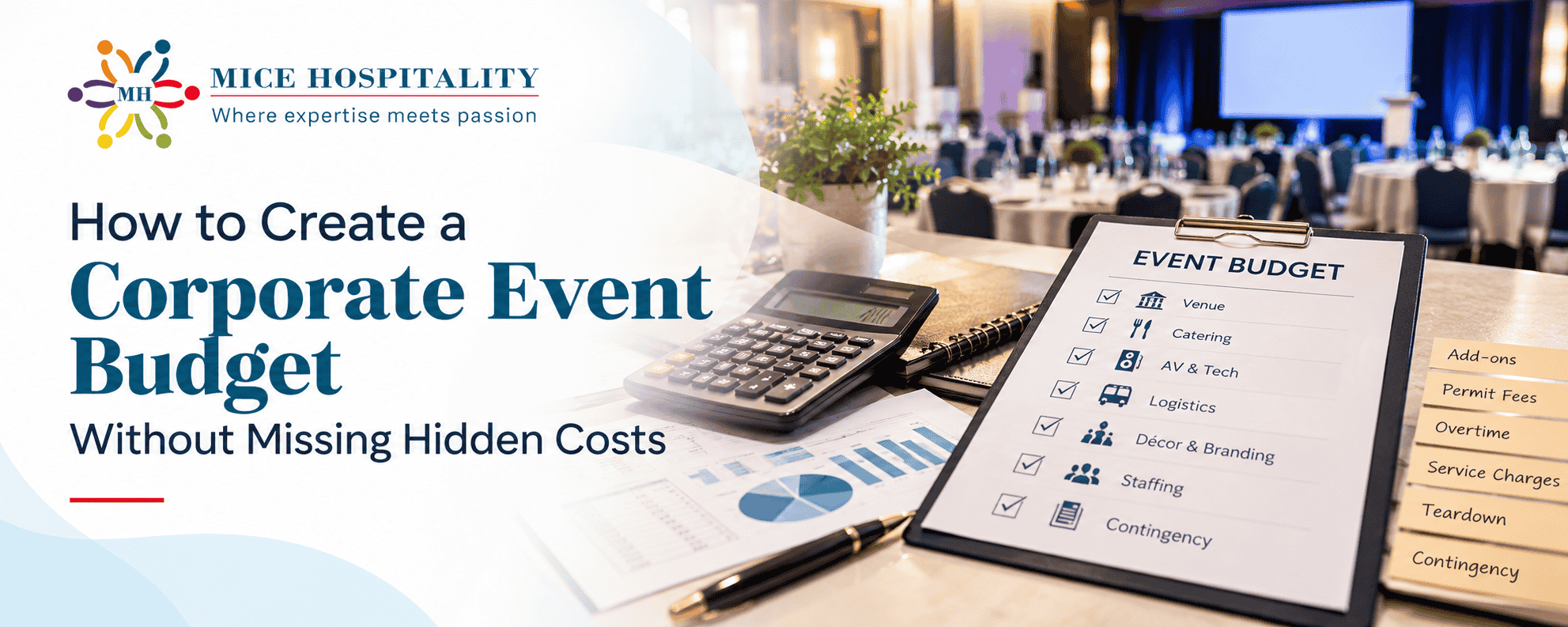
Budget for the less obvious lines too, such as taxes, AV upgrades, extra rooms for late changes and staff accommodation. Our post on hidden costs in a corporate event budget covers these in more detail.
Choose the Venue for Delegate Movement, Not Just Hall Size
Hall capacity is the easy part. The questions that matter more on the day are these:
How long is the drive from the airport or station at peak hour?
Are the hall, breakout rooms, dining area and rooms in one building, or spread across a campus?
Can the hotel hold your full room block, or will you need a second property and shuttles?
Is there space for a registration desk away from the main lobby?
Timing matters as well. In India, peak conference months overlap with the wedding season, roughly November to February, when banquet halls and room inventory at popular hotels get committed early.
Delegate Management Runs on One Master Sheet
Good delegate management comes down to one rule: there is a single, current list, and everyone works from it. The hotel, travel desk, transport vendor and your own team should never hold different versions.
The sheet should carry each delegate's name, mobile number, origin city, travel details, arrival and departure times, room type, sharing partner and dietary preference. Set a firm cut-off for rooming and transfer changes, usually one to two weeks before travel. Flight changes need an earlier cut-off, tied to when tickets are issued. After each cut-off, log every change with the date and who approved it.
Name changes cause the most trouble. Airlines and hotels each have their own rules on them, so learn those rules before confirming bookings, not after a regional head swaps out three people.
Plan Delegate Travel in Arrival Waves
Group travel is where corporate conferences most often slip. Good group travel planning keeps arrivals predictable instead of scattered across the day. A few things help:
Book group fares or block seats early on key routes instead of letting delegates book individually
Cluster arrivals into waves so airport pick-ups run to a timetable
Station a team member at the airport on arrival day with the transfer list
Plan speaker and leadership arrivals separately, with their own pick-up and a buffer before their session
Plan return transfers with the same care, because closing sessions overrun and flights don't wait
Track who arrives late or leaves early so meal and session counts stay accurate
Conference Logistics on the Day Need a Control Desk
Once attendees arrive, conference logistics shift from planning to coordination. Set up a control desk with a shared run sheet that lists every session, meal, transfer and AV cue against a time and a named owner. Then build in a few habits:
An AV rehearsal the evening before, with every presentation loaded on the venue system
Meal timings agreed with the kitchen against the real agenda, with a buffer for overruns
One contact each for venue, AV, transport and delegate queries, all on one group
A ten-minute team briefing each evening to fix what slipped before the next morning
When Does a Corporate Conference Need Additional Support?
An internal team can handle a 40-person day meeting in the city. Once attendees are flying in from several locations for a residential format, with more than one venue or vendor involved, the workload usually outgrows a side responsibility for HR or admin.
Planning a corporate conference involving multiple locations, accommodation and delegate transfers? MICE Hospitality can help coordinate the travel and on-ground arrangements. Explore our corporate conference management services or contact our team to discuss your requirements
FAQs
What is delegate management at a corporate conference?
It means keeping one current record of every attendee’s travel, stay, sessions and dietary needs, and coordinating the hotel, travel desk and transport vendors from it.
How early should delegate flights be booked for a corporate conference?
Six to eight weeks ahead for domestic groups and two to three months for international, earlier if visas are needed. Check name-change rules before tickets are issued.
What cancellation and rescheduling terms should be checked before booking a conference venue?
Check cancellation charges by stage, the room block attrition clause and minimum food and beverage guarantees. Confirm in writing whether a date change counts as a cancellation.
How many months in advance should a conference venue be locked in?
Four to six months is a sensible lead time for most corporate conferences of 100 to 300 delegates. For larger groups, popular destinations or peak-season dates, aim for six to nine months.
What should be included in a corporate conference planning checklist?
A checklist should cover the budget, venue, delegate list, accommodation, travel bookings, dietary requirements, session schedule, AV arrangements and on-ground coordination.

Planning something similar?
Share a few details and our team will come back with a tailored proposal.


 Conference Organizer
 Event management
 Team Outing
 Travel Planner
 Wedding Planning